- 0
- 2,497 words
Choosing a professional hair-cutting course is an important step for anyone who wants to build a career in the beauty and hairstyling industry. Many beginners want to learn how to cut hair professionally, improve their practical skills, and eventually work in a salon or start their own business. However, before enrolling, students often have one important question: 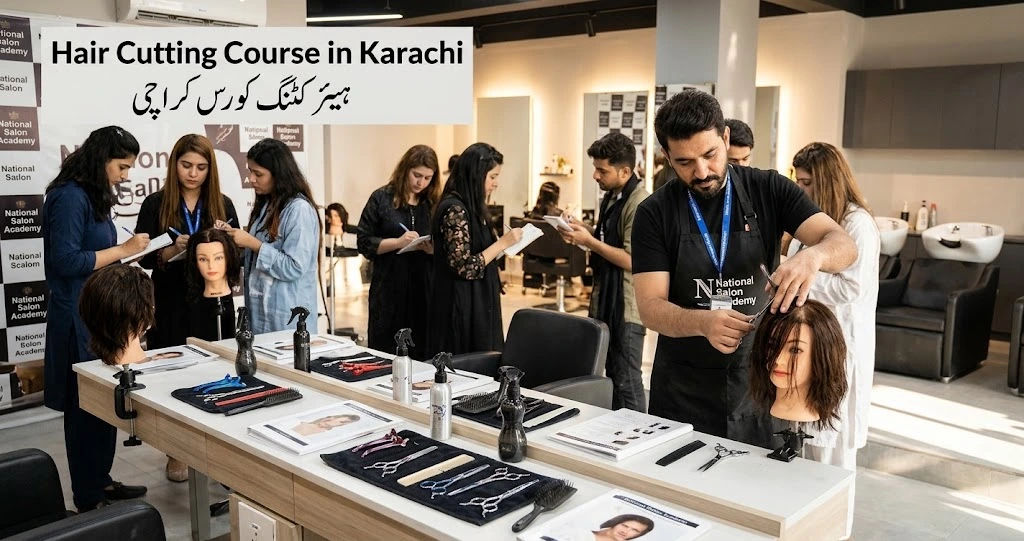 Does completing a course provide an official certificate?
A certificate can make a difference when applying for jobs, building customer trust, or starting a professional career. It provides evidence that a student has completed specific training and gained knowledge of essential hairstyling techniques. A hair cutting course in Karachi may offer a certificate after successful completion, depending on the institute, course structure, assessment process, and certification policy.
Understanding what type of certificate is available, what it represents, and how it can support your career will help you make a better decision. This comprehensive guide explains everything students should know before enrolling in professional hair-cutting training.
Do Hair Cutting Courses in Karachi Provide Certificates?
Yes, many professional beauty institutes and training academies in Karachi provide certificates after students successfully complete their hair-cutting programs. However, certification is not automatically included in every course.
Different institutes follow different policies. Some provide certificates after students attend all classes, while others require learners to complete practical assessments or demonstrate particular skills before receiving their qualifications.
A certificate generally confirms that a student has completed a particular training program. It may include information such as:
-
Student's full name.
-
Name of the training institute.
-
Course title.
-
Duration of the program.
-
Date of completion.
-
Authorized signature.
-
Institute stamp or certificate identification number.
Before registering, students should ask the academy whether certification is included in the course fee or requires an additional payment.
Why Is a Certificate Important After Hair Cutting Training?
A certificate can provide several advantages to someone entering the beauty industry. Although practical ability is essential, documented training can make a professional profile more attractive to potential employers.
1. Helps You Apply for Salon Jobs
Many salons prefer candidates who have received professional training. A certificate can help demonstrate that an applicant has studied basic haircutting methods and completed a structured learning program.
When applying for a position, students can include their certificate in their professional portfolio. It gives salon owners additional information about their training background.
However, employers may also conduct practical tests to evaluate cutting techniques, customer handling, and overall confidence.
2. Builds Customer Confidence
Customers usually want someone who understands different hairstyles, hair textures, and cutting techniques.
Displaying a training certificate in a salon can help communicate your educational background. It may encourage new customers to feel more comfortable when choosing your services.
However, certificates alone cannot guarantee customer satisfaction. Consistent results, cleanliness, communication, and professional behavior are equally important.
3. Supports Freelancing Opportunities
Not everyone wants to work in an established salon. Some students prefer offering home-based hairstyling services or working independently.
A certificate can support your professional introduction when advertising services online or approaching potential customers.
It can also become part of your portfolio when promoting your skills on social media.
4. Encourages Professional Development
Completing a training program gives students a sense of achievement. Receiving a certificate can motivate them to continue learning more advanced techniques.
They may later explore hair coloring, styling, chemical treatments, and other beauty-related subjects.
What Type of Certificate Can Students Receive?
Not every training certificate has the same value. Students should understand the differences between the common types of certificates before selecting an institute.
Course Completion Certificate
A course completion certificate confirms that a student has successfully finished a particular training program.
It is commonly provided by private beauty academies and training institutes.
The certificate may mention the skills covered during training, such as basic cutting, layering, sectioning, and styling.
Professional Training Certificate
Some institutes provide professional training certificates after students complete a more detailed program.
These courses may include theoretical lessons, practical demonstrations, and supervised exercises.
A professional training certificate can help students demonstrate that they have received structured instruction.
Government-Recognized Qualification
Some vocational training programs operate under recognized educational or skills-development authorities.
Such qualifications may follow specific assessment standards and certification procedures.
Students should verify the recognition directly with the relevant authority rather than assuming that every institute-issued certificate is government-approved.
A private academy certificate and an officially recognized vocational qualification are not necessarily equivalent.
What Skills Are Taught in a Hair Cutting Course?
A good training program should provide more than basic instructions about using scissors. Students should learn the techniques required to understand hair structure, select suitable styles, and deliver professional results.
When choosing a hair cutting course in Karachi, check whether the curriculum includes the following essential skills.
Basic Haircutting Techniques
Beginners usually start with fundamental cutting methods.
These may include:
-
Straight and blunt cuts.
-
Basic trimming.
-
One-length haircuts.
-
Point cutting.
-
Sectioning and parting.
-
Proper scissor handling.
Students practice these techniques under the guidance of an instructor.
Learning the basics correctly is important because advanced hairstyles often depend on these foundational skills.
Layer Cutting
Layer cutting is a popular technique used to create movement, volume, and texture.
Students learn how to divide hair into sections and cut different lengths to achieve a balanced appearance.
They may also study how layers affect different hair lengths and face shapes.
Bob and Step Haircuts
Bob and step hairstyles are common services in professional salons.
Training may cover different bob styles, graduated cuts, and step-cutting methods.
Students learn how to maintain symmetry, control length, and create clean finishing lines.
Hair Texture and Face Shapes
Every customer has different hair characteristics and styling preferences.
A professional hairstylist should understand how hair thickness, texture, density, and natural movement affect haircut selection.
Students may also learn how to recommend styles according to individual preferences and facial features.
Professional Tool Handling
Using the right tools is essential for achieving accurate results.
A training program should introduce students to:
-
Professional cutting scissors.
-
Hair combs.
-
Sectioning clips.
-
Hairbrushes.
-
Spray bottles.
-
Hair dryers.
-
Clippers and trimming equipment.
Students should also learn how to clean, disinfect, store, and maintain their equipment properly.
How Long Does It Take to Complete the Course?
The duration depends on the training institute, course level, and number of practical sessions.
Some beginner programs may last a few weeks, while more comprehensive professional courses can continue for several months.
A short course generally focuses on basic cutting techniques. Longer programs may include advanced hairstyles, practical assignments, customer consultation, and salon preparation.
Before enrolling, ask for a complete timetable.
You should also find out whether missed classes can be recovered and whether the institute provides additional practice sessions.
A hair cutting course in Karachi should provide enough time for students to practice independently instead of relying entirely on instructor demonstrations.
What Are the Requirements for Receiving a Certificate?
Institutes may have different certification requirements. However, students are commonly expected to meet several basic conditions.
Complete the Required Classes
Students may need to attend a minimum number of training sessions.
Regular attendance helps learners understand each technique and develop confidence through repeated practice.
Complete Practical Assignments
Some institutes ask students to demonstrate different haircutting methods.
These exercises allow instructors to evaluate cutting accuracy, technique, and finishing quality.
Pass the Final Assessment
A final assessment may include written questions, practical demonstrations, or both.
Students might be asked to perform a specific haircut while following professional procedures.
Follow Institute Guidelines
Students may also need to follow classroom rules, maintain equipment, and complete any required assignments.
Before starting a hair cutting course in Karachi, request a written explanation of the conditions for receiving the certificate.
How to Choose the Right Training Institute in Karachi
Selecting the right institute is just as important as choosing the course itself.
A good academy should provide experienced instructors, practical training facilities, and a clear certification policy.
Check the Institute's Reputation
Research the institute before paying registration fees.
Read student reviews, explore its social media pages, and ask former students about their experiences.
You can also visit the academy to understand its teaching environment.
Ask About Instructor Experience
Experienced instructors can explain techniques more effectively and help students correct mistakes.
Ask about their professional background and whether they have experience working in salons or providing hairstyling services.
Examine the Course Curriculum
Do not enroll simply because an institute advertises a certificate.
Request a detailed syllabus that explains the topics covered during training.
A comprehensive curriculum should include theory, practical exercises, hygiene, tool handling, and different haircutting methods.
Compare Practical Training Opportunities
Hair cutting is a practical profession.
Students need opportunities to work with mannequins and, where appropriate, real models under supervision.
Ask how much classroom time is dedicated to practical exercises.
A quality hair cutting course in Karachi should balance demonstrations with hands-on learning.
Confirm Certificate Recognition
This is one of the most important steps.
Ask whether the certificate is issued directly by the institute or through an external awarding organization.
If the academy claims government recognition, request the name of the relevant authority and verify the claim independently.
Do not rely entirely on promotional advertisements.
Questions to Ask Before Enrolling
Before making a final decision, students should ask the academy several important questions.
These questions can prevent misunderstandings and help you understand what you are paying for.
-
Is a certificate included in the course fee?
-
What is the exact name of the certificate?
-
Is the certificate issued by the institute or an external organization?
-
Is the qualification officially recognized?
-
What are the attendance requirements?
-
Is a practical examination required?
-
How long does it take to receive the certificate?
-
Are students provided with training materials?
-
Does the academy provide supervised practice?
-
Is there any additional certification fee?
A trustworthy institute should explain these details clearly.
Can You Get a Job After Receiving the Certificate?
Yes, completing professional training and receiving a certificate can help students apply for entry-level positions in the beauty industry.
However, employment depends on more than educational documentation.
Salon owners generally want workers who can perform services accurately, communicate politely, and understand customer expectations.
Working in a Professional Salon
Students may apply for positions such as junior hairstylist, salon assistant, or trainee hairdresser.
These roles allow beginners to gain experience while learning from senior professionals.
With regular practice, they may become qualified to handle more complicated haircuts.
Starting Your Own Salon
Some students eventually decide to establish their own businesses.
A certificate can support their professional background, but business owners may also need to consider business registration, local requirements, equipment, location, and operating expenses.
Offering Home-Based Services
Home-based hairstyling can be another option.
Students may provide basic haircuts and grooming services after developing sufficient practical ability.
They should maintain proper hygiene and use clean, well-maintained tools.
A certificate can support credibility, while customer satisfaction helps build long-term relationships.
Is Practical Experience More Important Than a Certificate?
Both are valuable, but practical experience plays a particularly important role in hair cutting.
A certificate confirms that a student has completed a course or met its stated requirements. It does not automatically prove that the student can perform every haircut professionally.
For example, a learner may understand the theory of layering but struggle to create balanced layers during an actual haircut.
This is why repeated practice is essential.
Students should focus on improving their hand movements, sectioning accuracy, cutting angles, and finishing techniques.
They should also learn how to communicate with customers before starting a haircut.
A good hair cutting course in Karachi should help students develop both theoretical understanding and practical confidence.
What Is the Difference Between a Basic and an Advanced Course?
Understanding course levels can help students choose training that matches their experience.
Basic Hair Cutting Course
A basic program is generally suitable for beginners.
It introduces fundamental techniques, including trimming, straight cuts, sectioning, and simple hairstyles.
Students learn how to use professional tools and understand basic salon procedures.
Advanced Hair Cutting Course
An advanced program is designed for learners who already understand the fundamentals.
It may cover:
-
Advanced layering techniques.
-
Precision cutting.
-
Graduated hairstyles.
-
Modern bob variations.
-
Textured haircuts.
-
Advanced finishing methods.
-
Personalized haircut recommendations.
Some academies also include professional styling and customer consultation.
Students should confirm whether an advanced certificate requires previous training or professional experience.
Common Mistakes to Avoid When Choosing a Course
Students sometimes focus only on the certificate and overlook other important details.
Avoiding these mistakes can help you receive better training.
Choosing an Institute Only Because of Low Fees
Affordable training can be useful, but the cheapest option is not always the best.
Compare instructor experience, practical facilities, course duration, and certification details before making a decision.
Ignoring Practical Training
Watching demonstrations is not enough to become a professional hair cutter.
Students need repeated opportunities to practice different techniques.
Assuming Every Certificate Is Officially Recognized
Some private academies issue their own certificates.
These documents may demonstrate course completion, but they should not automatically be described as government-recognized qualifications.
Always verify recognition claims.
Not Checking the Complete Fee Structure
Ask whether the advertised fee includes registration, learning materials, equipment, examinations, and certification.
This helps prevent unexpected expenses later.
Ignoring Post-Course Support
Some academies provide career guidance, additional practice opportunities, or assistance with salon placements.
Although these services are not guaranteed, they can be useful when starting a professional career.
How to Make the Most of Your Hair Cutting Training
Enrolling in a course is only the beginning of professional development.
Students should develop consistent learning habits to improve their skills.
First, attend classes regularly and pay attention to instructor demonstrations.
Second, practice every technique several times instead of moving quickly to advanced lessons.
Third, ask instructors to explain mistakes and demonstrate the correct methods.
Fourth, take photographs of completed hairstyles, with the model's permission, to build a professional portfolio.
Finally, continue learning after completing the program.
Hairstyling trends and customer preferences change over time. Professional development helps students remain competitive and improve their services.
Conclusion
Yes, many professional institutes in Karachi provide certificates after students successfully complete their hair-cutting training. However, the availability, type, and recognition of these certificates depend on the individual academy and its certification arrangements.
A certificate can help students demonstrate their training, apply for salon positions, build customer confidence, and establish a professional profile. Nevertheless, it should not be the only factor when selecting an institute.
Before enrolling, carefully examine the course curriculum, instructor experience, practical training opportunities, total fees, and certificate requirements. If an institute claims to offer an officially recognized qualification, verify that information through the relevant awarding authority.
Choosing a suitable hair cutting course in Karachi can be a valuable investment in your professional development. With proper instruction, consistent practice, and dedication, beginners can develop the skills needed to work in salons, provide independent hairstyling services, or eventually establish their own businesses.
Remember that professional success comes from combining quality education with practical experience. A certificate can open doors, but your skills, creativity, discipline, and commitment will help you build a successful career in the hairstyling industry.
Author
