- 0
- 2,934 words
Shipping is one of the most important parts of running a successful online store. Customers want affordable delivery, accurate shipping costs, flexible delivery options, and clear information about when their orders will arrive. For store owners, managing these expectations can become challenging when standard shipping settings do not match their business needs. 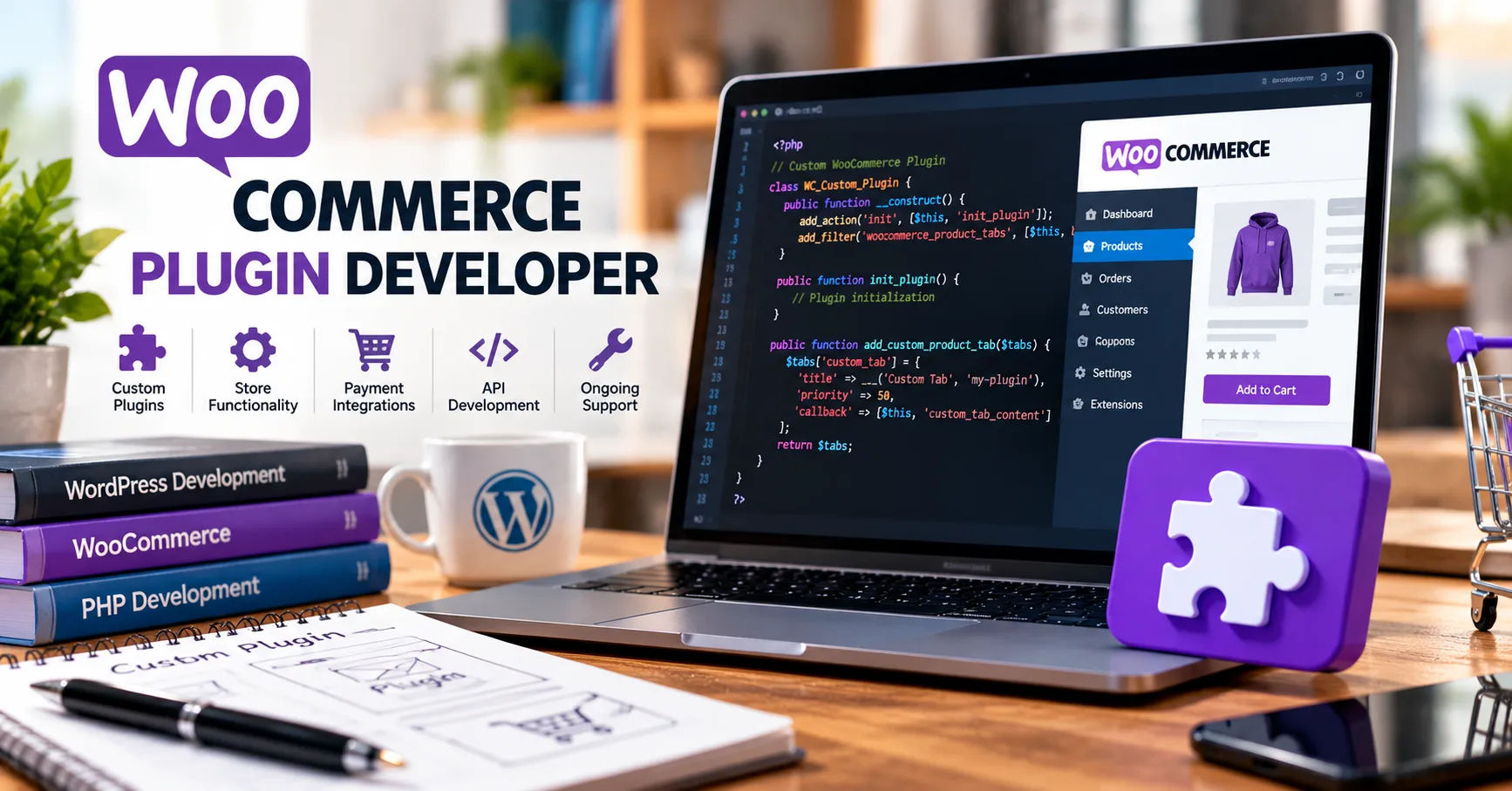 This is where a woocommerce plugin developer can make a significant difference by creating shipping features that work specifically for an online store.
WooCommerce offers several built-in shipping options, including flat-rate shipping, free shipping, and local pickup. However, businesses often need more advanced functionality as they grow. A store might sell products with different sizes, ship internationally, offer special delivery services, or calculate shipping prices according to customer location. In these situations, custom development can provide greater control and flexibility.
A developer can modify existing shipping behavior, build a dedicated shipping plugin, or integrate external delivery services. These improvements can help businesses reduce manual work, improve checkout experiences, and manage orders more efficiently.
This comprehensive guide explains how shipping customization works in WooCommerce, which features can be developed, what benefits businesses can expect, and how to choose the right development approach.
Shipping in WooCommerce
WooCommerce is an e-commerce platform built on WordPress. It provides essential tools for selling products online, managing orders, accepting payments, and calculating delivery costs.
Its default shipping system is suitable for many small businesses. Store owners can organize shipping methods into shipping zones, which determine the delivery options available to customers in different geographical areas.
For example, a business might offer free shipping within its home country, charge a flat fee for nearby regions, and use international shipping rates for overseas customers.
Although these features cover common requirements, they may not support every business model without additional configuration, extensions, or custom development.
What Is a Shipping Zone?
A shipping zone is a geographical area where specific shipping methods and prices apply. Store owners can define zones using countries, states, provinces, or postal codes, depending on their delivery requirements.
For example, an online clothing store could create separate zones for local customers, domestic customers, and international buyers. Each zone could have different delivery charges and available services.
Custom development becomes useful when the rules are more complicated than ordinary geographical settings can handle.
What Is a Custom Shipping Method?
A custom shipping method is a delivery option developed or configured to meet specific business requirements.
Examples include same-day delivery, temperature-controlled transportation, special handling for fragile goods, and shipping prices based on product dimensions.
A developer can build a method that appears during checkout and calculates the appropriate cost using defined rules. The method can also account for product categories, delivery locations, order values, and other relevant information.
How a WooCommerce Plugin Developer Can Customize Shipping
A developer can customize nearly every practical part of the WooCommerce shipping process, provided the required information and integrations are available.
The best approach depends on the store's products, delivery network, customer expectations, and operational goals.
Creating Custom Shipping Rules
Standard shipping methods may not provide enough control when a business uses complex pricing structures.
A developer can create rules that calculate delivery charges according to specific conditions. For instance, a furniture store might charge more for bulky items, while a stationery store could offer discounted shipping for larger orders.
Custom rules can consider several factors:
-
Total order value.
-
Product weight and dimensions.
-
Number of products in the cart.
-
Shipping destination.
-
Product category.
-
Customer type or membership level.
-
Special handling requirements.
Consider an online store that charges a standard delivery fee for small orders but provides free shipping when customers spend more than a certain amount. A custom solution could apply that discount automatically and exclude oversized products that are expensive to transport.
These rules make shipping prices more consistent and reduce the need for staff to calculate charges manually.
Developing Weight-Based and Dimension-Based Shipping
Some products are expensive to ship because of their physical size or weight. A single flat shipping rate may cause businesses to lose money on heavy orders or overcharge customers buying lightweight products.
A developer can create a system that calculates shipping using product weight, package dimensions, or predefined weight ranges.
For example, a store could charge one rate for packages weighing up to two kilograms, another for packages weighing between two and five kilograms, and a separate rate for larger shipments.
Dimensional pricing can also be important because some carriers charge according to package volume rather than actual weight.
For accurate calculations, product measurements must be maintained correctly, and the shipping rules should reflect the carrier's pricing structure.
Offering Location-Based Shipping Options
Different destinations often require different delivery services and prices. A store serving several cities or countries may need more detailed control than standard shipping zones provide.
A developer can build location-based rules using postal codes, regions, delivery boundaries, or supported address information.
For example, a grocery business might offer same-day delivery to customers within a selected service area while providing standard shipping to customers farther away.
Another store might offer free delivery to specific neighborhoods when the order exceeds a minimum value.
These features can improve pricing accuracy and prevent customers from selecting delivery services that are unavailable at their addresses.
Integrating Real-Time Carrier Rates
Shipping carriers frequently calculate prices using destination, package weight, dimensions, service type, and delivery speed. Manually maintaining every possible rate can become difficult as a store expands.
A developer can integrate WooCommerce with a supported carrier API to retrieve shipping rates during checkout.
Depending on the carrier and integration, customers may see options such as standard delivery, express shipping, or other available services.
The integration can also help store owners compare carrier rates and choose appropriate delivery methods.
However, real-time rates depend on several factors, including valid carrier credentials, accurate package information, API availability, and the carrier's service coverage.
A developer should also create sensible fallback behavior for situations in which the carrier's service is temporarily unavailable.
Building Free Shipping and Discount Rules
Free shipping can encourage customers to complete purchases, especially when delivery charges would otherwise increase the total cost.
WooCommerce supports basic free-shipping configurations, but some businesses need more detailed conditions.
A developer can create advanced rules that provide free delivery when customers purchase selected products, reach a specific spending threshold, use a promotional code, or qualify for a membership benefit.
For example, a store might offer free delivery on orders above $100 while excluding furniture, hazardous goods, or products that require special transportation.
The system can display the correct delivery charge automatically and explain the conditions to customers.
Clear rules are essential because unexpected shipping fees can damage trust and lead to abandoned carts.
Advanced Shipping Features for Growing Businesses
As an online store becomes more successful, its shipping requirements often become more complicated. Custom development can help the store handle these changes without relying on manual processes.
Conditional Shipping by Product Category
Different products may require different packaging, carriers, or handling procedures.
A business selling electronics, clothing, furniture, and fragile accessories may not want every item to follow the same shipping rules.
A developer can configure category-based shipping methods, allowing certain products to use specialized rates or delivery services.
For example, fragile products might require protective packaging and additional handling fees, while digital products should not generate physical shipping charges.
The system must also account for mixed carts containing products from multiple categories. Depending on the business rules, WooCommerce may need to combine shipping costs, select a suitable package, or apply the highest relevant rate.
Multiple Packages and Split Shipments
Some orders contain products that cannot be shipped together. They may come from different warehouses, require separate packaging, or be fulfilled by different suppliers.
A custom shipping solution can divide an order into multiple packages and calculate shipping costs for each one.
For instance, a customer might purchase a desk and a set of office accessories. The accessories could ship in a small parcel, while the desk requires a separate freight service.
The checkout calculation should clearly explain the total delivery cost without confusing customers with unnecessary technical details.
More advanced implementations may also support separate tracking numbers and shipment notifications for each package.
Same-Day and Scheduled Delivery
Businesses such as bakeries, florists, grocery stores, and local retailers often need more flexible delivery arrangements.
A developer can create options that allow customers to select available delivery dates, time windows, or express services.
The system can apply rules based on order cut-off times, delivery capacity, holidays, and geographical service areas.
For example, orders placed before noon might qualify for same-day delivery within a limited radius. Orders placed later could be scheduled for the next available day.
Scheduled delivery features should be connected to the store's actual fulfillment capacity. Otherwise, customers may choose time slots that the business cannot reasonably fulfill.
International Shipping Customization
International shipping involves additional considerations, including different currencies, destination restrictions, customs requirements, and varying carrier services.
A developer can build rules that display suitable shipping methods for international destinations and calculate charges using supported carrier data.
The checkout experience can also explain estimated delivery times and any known limitations.
However, shipping charges, customs duties, import taxes, and brokerage fees are not always the same thing. A custom shipping feature should distinguish between these costs and avoid promising that all international charges are included unless the arrangement actually supports that promise.
Store owners should confirm applicable customs requirements and carrier policies before launching international delivery features.
Connecting WooCommerce With Shipping and Fulfillment Services
A shipping customization project may involve more than calculating delivery prices. Businesses often need shipping information to move between their online store, warehouse, carrier, and customers.
Shipping Label Generation
A custom integration can help generate shipping labels after an order is placed.
Depending on the carrier and service, the system may send package details to the shipping provider, retrieve a label, and make it available to store staff.
This reduces repetitive data entry and can help speed up order fulfillment.
The integration should validate addresses, package details, and service requirements before generating labels. It should also handle errors without creating duplicate shipments.
Tracking Numbers and Delivery Updates
Customers appreciate knowing where their orders are and when they are likely to arrive.
A developer can integrate tracking information into order confirmation pages, customer accounts, and shipping notification emails.
Where the carrier provides tracking events, the store may display updates such as shipment received, in transit, out for delivery, and delivered.
The accuracy and frequency of these updates depend on the carrier's tracking service and the integration's design.
Warehouse and Inventory Integration
Businesses operating multiple warehouses may need to choose where each order should be fulfilled.
A custom shipping system can consider stock availability, warehouse location, delivery destination, and shipping costs when determining the most suitable fulfillment location.
For example, an order might be shipped from a nearby warehouse if the product is available there, helping reduce transit time and transportation expenses.
These systems require careful planning because stock levels can change quickly. Inventory and shipping decisions should remain synchronized to prevent unavailable products from being assigned to shipments.
Benefits of Custom WooCommerce Shipping Development
Custom shipping features can provide practical benefits when they solve genuine operational problems.
Better Customer Experience
Customers want to understand delivery costs before completing checkout. They also expect available shipping methods to match their addresses and orders.
Accurate calculations, clear delivery estimates, and suitable shipping choices make the buying process easier.
When customers understand their options, they are less likely to encounter unexpected fees or checkout errors.
Reduced Manual Work
Without automation, employees may need to calculate shipping charges, compare carrier prices, create labels, and update tracking information manually.
Custom development can automate many of these activities.
This can save time, reduce data-entry mistakes, and allow staff to focus on packing orders, helping customers, and managing business operations.
Improved Cost Control
Incorrect shipping prices can reduce profit margins. Undercharging can make fulfillment expensive, while overcharging can discourage customers from placing orders.
Custom rules can improve the relationship between actual delivery costs and the amount charged at checkout.
Store owners should regularly review shipping performance because carrier rates, packaging expenses, and delivery conditions may change.
Greater Business Flexibility
A growing business may introduce new product categories, delivery locations, subscription services, or fulfillment partners.
Custom shipping functionality can support these changes without forcing the business to rely entirely on its original shipping setup.
Good development also makes future improvements easier by keeping shipping rules organized and avoiding unnecessary modifications to core WooCommerce files.
Custom Shipping Plugin or Existing Extension?
Not every store needs a completely new plugin. The right choice depends on the complexity of its requirements and the features already available.
When an Existing Plugin Is Enough
An established shipping extension may be suitable when a store needs standard carrier rates, basic table rates, shipping labels, or common delivery rules.
Using an existing solution can reduce development time and provide access to features that have already been tested across many stores.
Before installing an extension, owners should check its compatibility, documentation, maintenance history, support options, and pricing.
They should also confirm that it supports their required carrier, country, and checkout setup.
When Custom Development Is Better
Custom development becomes more attractive when existing plugins cannot handle important business rules or when several systems must work together in a specific way.
A custom solution may be appropriate for complex product-based pricing, specialized local delivery, unusual fulfillment workflows, or integrations with proprietary business software.
A woocommerce plugin developer can review the store's current setup and determine whether configuration, an existing extension, or a purpose-built plugin offers the best long-term value.
The goal should not be to create custom code simply because it is possible. It should be to solve a clear business problem with a reliable and maintainable solution.
How to Choose the Right Developer
Selecting the right developer is important because shipping affects checkout, order management, fulfillment, and customer satisfaction.
Review Relevant Experience
Look for experience with WooCommerce shipping methods, WordPress plugin development, checkout customization, and external API integrations.
Ask whether the developer has worked with similar shipping rules or carriers.
A developer who understands both WooCommerce and real-world fulfillment requirements is better positioned to identify practical problems before development begins.
Define Your Requirements Clearly
Before requesting a quote, describe what the shipping system should do.
Include the products being shipped, target destinations, pricing rules, required carriers, package calculations, and any delivery scheduling needs.
Explain what should happen when an item is unavailable, an address cannot be validated, or an external shipping service stops responding.
Clear requirements help prevent misunderstandings and make it easier to measure whether the completed solution meets expectations.
Ask About Testing and Maintenance
Shipping features must be tested under different conditions, including mixed carts, multiple destinations, unusual package sizes, and failed API requests.
Ask how the developer will test the checkout process and whether the solution will be checked against your current WooCommerce version.
You should also discuss documentation, future updates, bug fixes, security practices, and ongoing support.
Shipping plugins may need adjustments when WooCommerce, WordPress, carrier APIs, or other extensions change.
Consider the Total Cost
The initial development price is only one part of the total cost.
You may also need to account for ongoing maintenance, third-party service fees, carrier API charges, hosting requirements, and future enhancements.
Compare these expenses with the time saved, shipping errors avoided, and operational benefits the solution could deliver.
A simpler solution that reliably handles your requirements may be more valuable than a complicated system with features your business rarely uses.
Best Practices for Reliable Shipping Customization
Successful shipping development requires careful implementation and regular review.
First, use WooCommerce's supported extension mechanisms whenever possible. Avoid editing core WooCommerce files because updates can overwrite those changes and make the store harder to maintain.
Second, test custom features on a staging website before deploying them to a live store. Testing should include successful transactions, failed calculations, unavailable shipping services, refunds where relevant, and mixed-product orders.
Third, validate the information used to calculate shipping. Incorrect product weights, missing dimensions, incomplete addresses, and outdated shipping zones can produce inaccurate rates even when the underlying code works correctly.
Fourth, design clear error messages and fallback options. If real-time rates cannot be retrieved, the store should follow a deliberate policy rather than display misleading prices or silently offer an unsuitable service.
Finally, monitor shipping performance after launch. Review delivery costs, checkout abandonment, fulfillment time, customer complaints, and rate-calculation errors. These measures can help identify where further improvements are needed.
Conclusion
Yes, WooCommerce shipping can be customized to support a wide range of business requirements. From simple flat-rate adjustments to advanced carrier integrations, custom pricing rules, scheduled delivery, and warehouse automation, there are many ways to make shipping more accurate and efficient.
The most suitable solution depends on the store's products, customers, shipping destinations, fulfillment process, and budget. Some businesses can meet their needs with existing extensions, while others benefit from a purpose-built plugin that supports specialized workflows.
Working with an experienced woocommerce plugin developer can help store owners identify the right approach, implement shipping rules carefully, and integrate the necessary services. The development process should include clear requirements, realistic cost estimates, thorough testing, and a plan for future maintenance.
Ultimately, effective shipping customization is about more than adding new checkout options. It helps businesses charge appropriate delivery fees, reduce manual work, improve order fulfillment, and give customers a smoother purchasing experience. By choosing a solution that fits their actual needs and maintaining it as the business grows, WooCommerce store owners can build a shipping process that supports long-term success.
Author
