- 0
- 2,721 words
Milk powder is a convenient dairy product that allows people to enjoy milk without needing to purchase fresh milk every day. It has a long shelf life, is easy to store, and can be prepared whenever needed. However, one important question often comes to mind when preparing powdered milk: how much water should be mixed with milk powder? Using the correct amount of water is essential for achieving the right taste, texture, consistency, and nutritional value.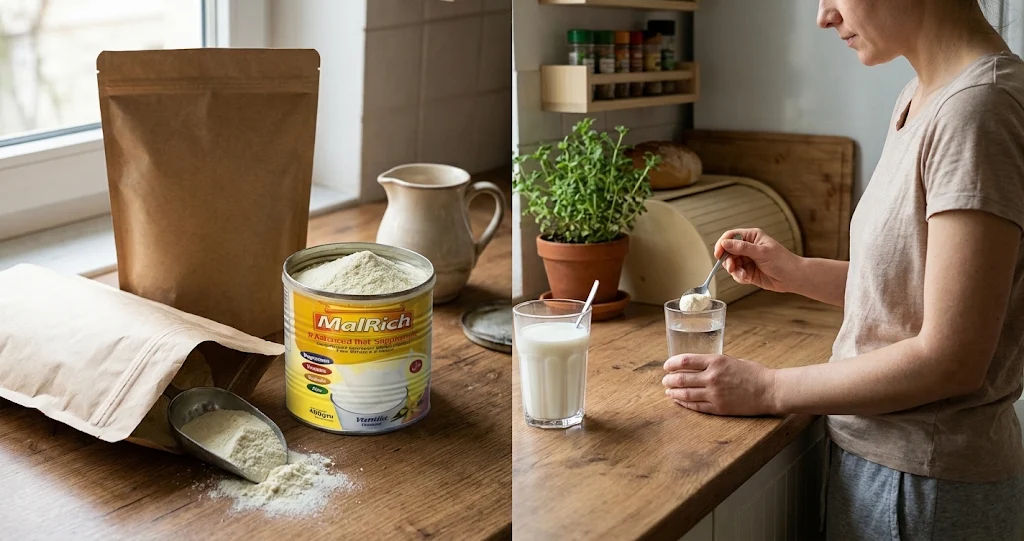
Preparing powdered milk may seem simple, but the water-to-powder ratio can make a significant difference. Too much water can produce thin milk, while too little water can make it overly thick. Whether you are preparing milk for breakfast, tea, coffee, desserts, or everyday drinking, following the correct mixing instructions helps you achieve consistent results. Products such as malrich milk powder can be incorporated into everyday routines when prepared according to the manufacturer's directions.
This comprehensive guide explains how much water to mix with milk powder, how to prepare it correctly, which mistakes to avoid, and how to achieve a smooth and enjoyable drink. It also discusses storage, temperature, measurements, and practical preparation tips for different household needs.
The Correct Water-to-Milk Powder Ratio
The correct amount of water depends primarily on the type of milk powder you are using. Different manufacturers may recommend different quantities because their products can have different compositions, concentrations, and intended uses.
There is no single universal measurement that works for every powdered milk product. Therefore, checking the instructions printed on the packaging should always be your first step.
Most regular whole or skimmed milk powders provide specific directions explaining how many tablespoons or grams of powder should be mixed with a particular quantity of water.
For example, some products recommend approximately 25 to 35 grams of powder for every 200 to 250 millilitres of water. However, this is only an illustrative range, not a universal recipe. Always follow the actual measurements provided by the manufacturer.
Why the Correct Ratio Matters
The water-to-powder ratio influences several important qualities of prepared milk.
Taste: Correctly prepared milk generally has a balanced dairy flavour. Too much water can make it taste weak, while excessive powder can produce a concentrated flavour.
Texture: The right quantity of water helps create a smooth consistency. Incorrect measurements may result in milk that feels unusually thin or thick.
Nutrition: Adding extra water changes the concentration of nutrients in each serving. Although it does not necessarily remove the nutrients from the powder, it distributes them across a larger volume.
Appearance: Properly mixed milk usually has a consistent colour and appearance without visible clumps.
For anyone regularly using malrich milk powder, following the recommended preparation ratio can help maintain consistency between servings.
How Much Water Should You Add to Different Quantities of Milk Powder?
The easiest way to prepare powdered milk is to measure the powder and water separately before mixing them.
Your product packaging should provide the exact measurements. If you prepare larger quantities, you can multiply the recommended quantities proportionally.
Here is an illustrative measurement guide for a product whose instructions recommend 30 grams of powder per 250 millilitres of water.
| Milk powder | Water |
|---|---|
| 15 grams | 125 ml |
| 30 grams | 250 ml |
| 60 grams | 500 ml |
| 90 grams | 750 ml |
| 120 grams | 1 litre |
These measurements demonstrate how to scale a particular recipe. They should not replace the preparation directions for your chosen product.
Preparing One Glass of Milk
If you only need one glass, begin by checking the serving instructions.
Measure the recommended quantity of powder using a kitchen scale or measuring spoon. Add the appropriate amount of drinking water and mix until the powder dissolves completely.
A glass containing approximately 200 to 250 millilitres of prepared milk is a common serving size, although your preferred quantity may differ.
Preparing One Litre of Milk
Preparing one litre at a time can be convenient for families or households that regularly consume powdered milk.
First, check the manufacturer's instructions for one litre. Measure the required amount of powder and place it in a clean container.
Add some water, stir thoroughly, and then add the remaining water until the recommended volume is reached.
This approach helps prevent lumps and makes it easier to achieve a consistent mixture.
Step-by-Step Guide to Mixing Milk Powder With Water
Preparing powdered milk correctly does not require special equipment. A clean container, drinking water, and an appropriate measuring tool are usually sufficient.
Follow these steps for a smooth result.
Step 1: Read the Product Instructions
Before opening the packet, check the preparation directions.
Look for information about the recommended powder quantity, water measurement, serving size, and storage requirements.
Different products may require different preparation methods. For example, malrich milk powder should be prepared according to the instructions provided for that particular product rather than relying on measurements intended for another brand.
Step 2: Measure the Water
Pour the recommended amount of clean drinking water into a suitable container.
Using a measuring jug is better than estimating the quantity with an ordinary glass because glass sizes can vary.
Accurate water measurement helps maintain the intended concentration.
Step 3: Measure the Milk Powder
Use a clean and dry measuring spoon or kitchen scale.
If the packaging provides measurements in grams, a kitchen scale offers greater accuracy than an ordinary spoon.
Avoid packing the powder tightly into the measuring spoon unless the instructions specifically require it.
Step 4: Combine the Ingredients
Add a small quantity of water to the powder and stir until it forms a smooth mixture.
Gradually add the remaining water while continuing to stir.
This technique helps break up dry pockets and prevents lumps from forming at the bottom of the container.
Step 5: Mix Thoroughly
Continue stirring until the powder has dissolved evenly.
You can use a spoon, whisk, or clean shaker with a secure lid.
If you use a shaker, make sure it is suitable for liquids and avoid shaking very hot water in a sealed container because pressure and heat can cause burns.
Step 6: Check the Consistency
Once mixing is complete, examine the milk.
It should have an even appearance without noticeable dry particles or powder deposits.
If it seems unusually thin or thick, check your measurements rather than automatically adding more powder or water.
Should You Use Hot or Cold Water?
The water temperature can influence how easily milk powder dissolves.
Both warm and cool water can be suitable, depending on the manufacturer's preparation instructions.
Using Warm Water
Warm water can help powdered milk dissolve more easily.
It is particularly useful when the powder tends to form small lumps during preparation.
However, the water should not be excessively hot. Very high temperatures may affect certain product characteristics and can make the drink uncomfortable or unsafe to consume immediately.
If you prefer warm milk, prepare it using the recommended temperature and allow it to cool to a comfortable drinking temperature.
Using Cold Water
Cold water is a convenient option when preparing milk for chilled drinks, smoothies, or breakfast cereals.
However, some milk powders take longer to dissolve in cold water.
To improve mixing, add the powder gradually and stir continuously.
A small whisk or suitable shaker can also help produce a smoother mixture.
Which Temperature Is Better?
There is no single answer for every product.
Warm water may make dissolving easier, while cold water is convenient for chilled preparations. The manufacturer's instructions should determine which method is appropriate.
When preparing malrich milk powder, follow its specific directions and avoid assuming that every powdered dairy product responds to temperature in exactly the same way.
Common Mistakes to Avoid When Mixing Milk Powder
Even though preparing powdered milk is straightforward, small mistakes can affect the final result.
Understanding these problems can help you prepare better-tasting milk.
Adding Too Much Water
One of the most common mistakes is adding more water than recommended.
Excessive water makes the prepared milk less concentrated. Its flavour may become weaker, and each glass may contain fewer nutrients than intended.
Instead of guessing, use a measuring jug and follow the serving instructions.
Using Too Much Powder
Adding extra powder does not automatically make milk healthier.
An unnecessarily concentrated mixture may taste too strong and provide more calories and nutrients per serving than expected.
It can also make the texture less enjoyable.
Always follow the recommended quantity.
Not Mixing Properly
Insufficient stirring can leave dry powder at the bottom or small lumps throughout the drink.
To prevent this problem, begin with a smaller quantity of water, mix the powder into a smooth paste, and gradually add the remaining water.
Using Dirty Equipment
Unclean glasses, spoons, bottles, and containers can introduce unwanted microorganisms.
Always wash the equipment thoroughly before preparing milk.
Make sure containers are completely dry before storing unused milk powder.
Guessing the Measurements
Household spoons and cups are not always identical.
A tablespoon from one kitchen may hold a different quantity than a tablespoon from another.
Using standard measuring equipment is a more reliable approach.
Does Adding More Water Reduce the Nutritional Value of Milk?
Yes, adding more water reduces the concentration of nutrients in each serving.
However, it is important to understand the difference between reducing nutrient concentration and removing nutrients.
Milk powder contains nutrients such as protein, carbohydrates, fats, calcium, and other minerals, depending on its formulation.
When you mix it with water, these nutrients are distributed throughout the prepared liquid.
If you add twice the recommended amount of water without increasing the powder quantity, the total nutrients remain approximately the same, but they are spread across twice the volume.
This means each glass contains a lower concentration of nutrients.
Why Nutrient Concentration Matters
Nutrient concentration is important because people generally consume milk in specific serving sizes.
For example, a 250-millilitre glass prepared according to the manufacturer's directions provides the intended concentration for that serving.
If the same quantity of powder is mixed into 500 millilitres of water, drinking only 250 millilitres provides approximately half the powder-derived nutrients.
This is why following the recommended preparation ratio matters.
Does Extra Powder Provide Additional Nutrition?
Increasing the amount of powder increases the concentration of its nutrients, but it also increases calories and other components.
More is not always better.
People with specific dietary requirements should consider the product's nutritional information and consult a qualified healthcare professional when necessary.
For regular household use, correctly preparing malrich milk powder according to its label is a sensible way to maintain the intended serving concentration.
How to Prepare Milk Powder for Different Uses
Powdered milk is a versatile ingredient that can be used in many household recipes.
However, the ideal consistency may vary depending on what you are preparing.
For Drinking
When preparing milk for direct consumption, follow the manufacturer's standard water-to-powder ratio.
Mix thoroughly and serve at your preferred temperature.
You can refrigerate the prepared milk if the product instructions permit it.
For Tea and Coffee
Milk powder can be useful when preparing tea and coffee.
Some people prefer mixing it with a small quantity of water before adding it to their hot drink.
This creates a smooth liquid mixture and reduces the possibility of visible lumps.
Avoid adding dry powder directly to very hot beverages if it does not dissolve properly.
For Smoothies
Powdered milk can add dairy flavour and protein to smoothies.
Prepare it according to the recommended ratio before combining it with fruits, oats, or other ingredients.
You can then blend everything until smooth.
Remember that additional ingredients also contribute calories, sugar, and nutrients.
For Cooking and Baking
Milk powder is frequently used in cakes, sauces, desserts, and other recipes.
Some recipes specifically require dry milk powder rather than reconstituted milk.
If a recipe asks for liquid milk, prepare the powder separately according to its instructions unless the recipe provides an alternative method.
Using the wrong form can change the moisture content and texture of baked products.
For Breakfast Cereals
Prepared milk powder can be poured over cereal, oats, or other breakfast foods.
A correctly measured mixture provides a familiar milk consistency and can be combined with different breakfast ingredients.
How to Store Prepared Milk and Unused Milk Powder
Proper storage is essential for maintaining quality and reducing the risk of contamination.
Dry milk powder generally lasts longer than prepared milk because it contains very little moisture.
However, once water is added, the product becomes perishable.
Storing Unused Milk Powder
Keep the powder in its original packaging or transfer it to a clean, airtight container if the manufacturer's instructions allow this.
Store it in a cool, dry place away from direct sunlight, heat, and moisture.
Always use a clean, completely dry spoon when taking powder from the container.
Moisture entering the package can encourage clumping and reduce product quality.
Storing Prepared Milk
Prepared milk should be placed in a clean, covered container and refrigerated promptly.
Follow the product's storage instructions and use it within the recommended period.
As a general food-safety precaution, perishable prepared milk should not remain at room temperature for more than two hours, or more than one hour when temperatures exceed 32°C.
Do not rely only on smell or appearance to determine whether stored milk is safe.
If the milk has been stored improperly, discard it.
Avoid Repeated Temperature Changes
Repeatedly removing milk from the refrigerator and leaving it at room temperature can increase the risk of bacterial growth.
It is better to prepare manageable quantities and keep unused portions refrigerated.
This is particularly important during warm weather.
Is the Same Water Ratio Suitable for Every Milk Powder?
No. Different milk powders can have different preparation requirements.
Whole milk powder, skimmed milk powder, instant milk powder, and specially formulated dairy products may not use identical measurements.
Some products are designed to dissolve quickly, while others may need more stirring.
Their fat content, protein composition, moisture levels, and manufacturing processes can also differ.
For this reason, consumers should never assume that one brand's measurements apply to another brand.
When purchasing malrich milk powder or any other powdered dairy product, read the label carefully before preparing it.
Check whether the instructions specify tablespoons, scoops, grams, or another measurement.
Also distinguish between instructions for preparing one serving and directions for making a larger quantity.
Important Safety Considerations
Although ordinary powdered milk is a convenient food product, proper preparation and handling remain important.
Always use potable water and clean utensils.
If the water supply is uncertain, use an appropriate safe-water treatment method before preparing milk.
People with lactose intolerance should check the ingredients because many conventional milk powders contain lactose.
Individuals with a milk allergy should avoid products containing milk proteins unless advised otherwise by an appropriate healthcare professional.
It is also important to distinguish ordinary powdered milk from infant formula.
Infant formula must be prepared using the exact instructions provided by its manufacturer. Never dilute infant formula with extra water or change its concentration to save money or increase volume. Incorrect preparation can cause serious nutritional and electrolyte problems for babies.
Similarly, people following medically prescribed diets should not independently change the concentration of their milk-based nutritional products.
Conclusion
Knowing how much water should be mixed with milk powder is essential for preparing milk that has the right taste, texture, and nutritional concentration. Although the preparation process is simple, using the correct measurements makes a noticeable difference in the final result.
The most important rule is to follow the instructions printed on the product packaging. Different powdered milk products have different compositions and preparation requirements, so there is no universal water-to-powder ratio that works for every brand. Measuring the ingredients accurately, using clean drinking water, and mixing thoroughly can help produce smooth and consistent milk.
Whether you are preparing one glass for breakfast, making a litre for the family, or using powdered milk in tea, coffee, smoothies, and desserts, proper measurements should remain a priority. Avoid adding excessive water or powder simply to change the consistency because doing so also changes the concentration of nutrients in each serving.
Products such as malrich milk powder can be convenient additions to everyday household routines when handled and prepared correctly. Paying attention to storage instructions, expiry dates, hygiene, and refrigeration can further support food quality and safety.
Ultimately, preparing good powdered milk does not require complicated techniques or expensive equipment. A measuring jug, a clean container, the correct quantity of powder, and the recommended amount of water are usually enough. By following these simple guidelines, you can enjoy properly prepared milk while making better use of your powdered dairy product.
Author
