- 0
- 2,519 words
Multiplayer online games have become an important part of modern entertainment, connecting players from different countries, cities, and backgrounds in shared virtual worlds. From competitive shooters and racing games to role-playing adventures and strategy games, these experiences allow people to play together in real time or interact with others even when they are not online at the same moment.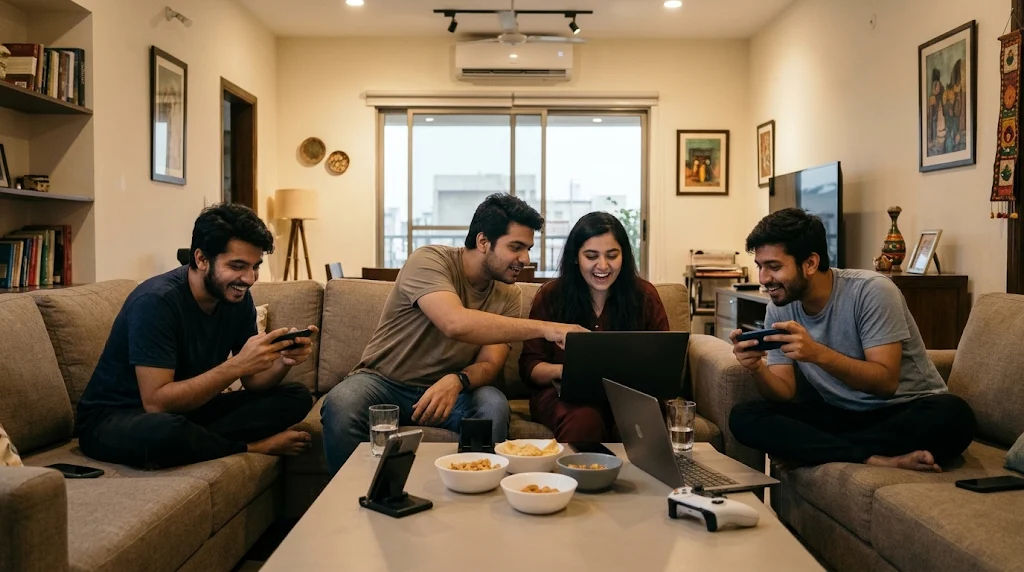
Understanding how multiplayer online games work involves learning about game servers, internet connections, player communication, matchmaking, game rules, and the technology that keeps everyone connected. Platforms such as OPEN88 are often associated with online gaming environments, where understanding the basic mechanics of online play can help users better recognize how digital gaming systems operate.
This comprehensive guide explains the technology, systems, and processes behind multiplayer online games in simple language.
What Are Multiplayer Online Games?
Multiplayer online games are digital games that allow two or more people to participate in the same gaming experience through an internet connection. Unlike single-player games, which are usually designed around one person's actions, multiplayer games involve multiple participants whose actions may affect each other.
Players can compete against one another, cooperate as a team, or explore a shared digital environment. Depending on the game, participants may interact through characters, vehicles, virtual objects, maps, or other game elements.
Different Types of Multiplayer Games
Multiplayer games come in several common forms.
-
Competitive games: Players compete to achieve a goal, score more points, or outperform opponents.
-
Cooperative games: Participants work together to complete missions, solve challenges, or progress through levels.
-
Massively multiplayer games: Large numbers of people share a virtual environment, sometimes at the same time.
-
Casual multiplayer games: Simple games designed for shorter sessions and easy participation.
-
Turn-based multiplayer games: Players take turns making decisions instead of acting simultaneously.
Each type uses different mechanics, but they generally rely on communication between players' devices and the game's servers.
How Multiplayer Online Games Connect Players
The internet is the foundation of multiplayer gaming. When a player opens a game, their device connects to the game's online services. These services help find other players, establish a session, and exchange information throughout the game.
The Role of the Internet Connection
An internet connection allows information to travel between a player's device and a remote server. This information can include movement, actions, player status, scores, and other game events.
For example, when a player moves a character across a map, the game sends information about that movement. Other players' devices receive updates so they can see the character moving within their own game environments.
The connection must remain reasonably stable for the game to function properly. A weak or interrupted connection may cause delays, disconnections, or temporary differences between what players see.
How Players Join the Same Game
Most multiplayer games use a process that helps players enter the same session.
The process often includes:
-
A player opens the game and signs into an account.
-
The game checks whether the account can access its online features.
-
The player selects a game mode or joins a matchmaking queue.
-
The system searches for other players or an existing session.
-
A server creates or assigns a multiplayer match.
-
Players receive the information needed to enter the session.
Once everyone is connected, the server and player devices begin exchanging updates.
Understanding Game Servers
Game servers are one of the most important parts of multiplayer online gaming. They are computers or systems that manage shared game sessions, process information, and help keep the game consistent for everyone participating.
What Does a Game Server Do?
A game server can manage many different responsibilities, including:
-
Tracking players within a session.
-
Managing character positions and movement.
-
Processing game events.
-
Maintaining scores and objectives.
-
Applying game rules.
-
Sending updates to connected players.
-
Managing session status and player connections.
Imagine four players participating in a team game. Each player has their own computer or console, but the server helps maintain the shared version of the game. If one player completes an objective, the server processes that event and communicates the updated status to the other players.
This shared system helps prevent each player from experiencing an entirely separate version of the same match.
Dedicated Servers and Peer-to-Peer Connections
Multiplayer games commonly use different networking models.
Dedicated servers are separate systems that host game sessions. Players connect to the server rather than relying on one participant's device to manage the entire match. This can improve consistency and reduce the effect of one player leaving.
Peer-to-peer connections allow players' devices to communicate directly or through supporting network services. In some games, one participant's device may also perform part of the session-management role.
The best approach depends on the game's design, number of participants, performance requirements, and available resources.
How Multiplayer Game Actions Work
Every action in a multiplayer game creates information that needs to be processed and shared.
When a player presses a button, the game may interpret it as movement, jumping, attacking, interacting with an object, or selecting an item. The device then communicates the action to the game's networking system.
From Button Press to Game Update
A typical action may follow these steps:
-
The player presses a control.
-
The local game registers the input.
-
The device sends relevant information to the server.
-
The server checks the action against the game rules.
-
The server updates the shared game state.
-
The updated information is sent to other players.
-
Their devices display the change.
This process happens repeatedly during gameplay, allowing multiple participants to interact within a common environment.
What Is Game State?
Game state refers to the current condition of a multiplayer game. It includes information about everything important happening within the session.
A game state may contain:
-
Player positions.
-
Health or character status.
-
Team information.
-
Scores and rankings.
-
Completed objectives.
-
Current round.
-
Items or resources.
-
Time remaining.
The server continuously updates this information as players make decisions. Keeping the game state consistent is essential because participants need to understand the same events and rules.
What Is Latency and Why Does It Matter?
OPEN88 is the time it takes for information to travel between a player's device and the game server. It is commonly measured in milliseconds.
Low latency generally makes games feel more responsive. High latency can make actions appear delayed, creating a less smooth experience.
Understanding Ping
Ping is commonly used to measure how quickly a device communicates with a server and receives a response.
A lower ping often means faster communication, while a higher ping may indicate greater delays. However, ping alone does not describe every aspect of connection quality.
Other factors include:
-
Network congestion.
-
Server distance.
-
Wi-Fi interference.
-
Internet service quality.
-
Packet loss.
-
Connection stability.
Why Players Experience Lag
Lag is a general term players use when a game feels delayed or behaves inconsistently.
It can happen because of a slow connection, overloaded server, unstable wireless network, or performance limitations on a device.
Sometimes the game may pause briefly. In other situations, characters may appear to move unpredictably or updates may arrive late.
A stable internet connection and reliable game servers can help improve the experience, although no connection is completely free from occasional interruptions.
Matchmaking: How Games Find Other Players
Matchmaking is the system that helps multiplayer games find participants for a session. It is particularly important in competitive games, where players generally expect reasonably balanced matches.
How Matchmaking Systems Work
When a player enters a matchmaking queue, the system may consider several factors.
-
Skill level or previous performance.
-
Geographic region.
-
Connection quality.
-
Available players.
-
Preferred game mode.
-
Team size.
-
Time spent waiting.
The system attempts to find participants who fit the requirements of a particular match.
For example, a game may try to create teams with similar average skill levels while prioritizing players who have reasonably stable connections to the same server region.
Why Matchmaking Takes Time
Matchmaking does not always find an available session immediately. If fewer people are online, the system may need to wait for additional players.
Certain game modes may also have specific requirements, such as a particular team size or ranking range. These conditions can make the search take longer.
The system must balance two goals: finding a match quickly and creating a reasonably fair gaming experience.
How Multiplayer Games Keep Players in Sync
One of the biggest challenges in multiplayer gaming is making sure everyone sees a similar version of events.
Since players use different devices and internet connections, their game screens cannot always update at exactly the same moment.
Synchronizing Player Actions
Game servers send regular updates containing information about the shared game environment.
A player's device receives these updates and adjusts its display accordingly. This may involve changing character positions, updating scores, displaying completed objectives, or showing the results of other actions.
Some games use interpolation, which estimates movement between received updates to make animation appear smoother.
Others use prediction techniques, where a device temporarily estimates the result of a player's action before receiving confirmation from the server.
These methods help reduce the feeling of delay without changing the game's underlying rules.
Why Players Sometimes See Different Things
Two players may briefly see different positions or actions because their updates arrive at different times.
For example, one player might see another character beginning to move while a second player receives that information a fraction of a second later.
The game networking system attempts to manage these differences so that the shared experience remains understandable and playable.
Communication in Multiplayer Games
Communication helps players coordinate activities, share information, and participate socially.
Many games include several communication tools.
Voice Chat
Voice chat allows players to speak to one another through microphones and headsets. It is particularly useful in team-based games where participants need to coordinate decisions quickly.
Text Chat
Text chat provides a way to exchange written messages. It may be available in team channels, private messages, lobby chats, or general game discussions.
Emotes and Signals
Some games provide built-in gestures, icons, or signals. These allow players to communicate without speaking or typing.
Communication systems can make multiplayer experiences more interactive, but players should use respectful language and avoid sharing personal information with people they do not know.
Accounts, Profiles, and Player Progress
Many multiplayer games use accounts to identify players and maintain their progress between sessions.
An account may contain a display name, settings, achievements, saved statistics, and other game-related information.
Why Player Accounts Are Important
Accounts allow players to return to a game without starting over each time. Depending on the game, progress may be stored on remote servers rather than only on the player's device.
Account systems may also support:
-
Friend lists.
-
Player profiles.
-
Achievements.
-
Match history.
-
Settings synchronization.
-
Cross-platform progress.
These features help create a continuous gaming experience across different sessions.
Players should use strong passwords, protect account recovery details, and avoid sharing login information.
Cross-Platform Multiplayer Gaming
Cross-platform multiplayer allows people using different devices to play together.
For example, a game may support participants using a computer, console, or mobile device within the same session.
How Cross-Platform Play Works
Developers build networking systems that allow different versions of a game to communicate using compatible rules and data.
The game may also need to account for differences in controls, screen sizes, performance, and available features.
Cross-platform support can make matchmaking easier by increasing the number of available players. However, some games separate participants according to device type or control method to maintain balanced gameplay.
Not every multiplayer game supports cross-platform play, so compatibility depends on the game's design.
How Developers Manage Fair Play
Fairness is an important part of multiplayer game design. Developers use different systems to make sure participants follow the game's rules.
Server-Side Rule Management
Many multiplayer games allow the server to verify important actions rather than relying entirely on information sent by individual devices.
This helps reduce disagreements between players and makes it harder for a modified game client to change important match results.
Moderation and Reporting
Online games may include reporting tools, chat filters, moderation systems, and account restrictions.
These tools help developers respond to disruptive behavior, inappropriate messages, or violations of the game's rules.
Fair-play systems are not perfect, but they are important for maintaining a healthy multiplayer community.
The Role of Graphics and Game Engines
Graphics are the visual part of a multiplayer experience. They include character models, environments, animations, lighting, and visual effects.
A game engine helps developers create and manage these elements.
How Game Engines Support Multiplayer
Game engines provide tools for rendering graphics, handling physics, processing player input, and organizing game logic.
They can also include networking features that help developers communicate game information between devices and servers.
Popular game engines are designed to support many types of projects, from simple multiplayer games to large online environments.
The engine itself does not automatically make a game multiplayer. Developers must design the networking, session management, game rules, and server infrastructure.
Common Problems in Multiplayer Online Games
Even well-designed games can experience technical or social problems.
Server Outages
Servers may temporarily become unavailable because of maintenance, technical failures, or unusually high demand.
When this happens, players might be unable to sign in or join matches.
Connection Problems
Poor internet connections can cause disconnections, delays, or incomplete updates.
Players may experience these issues more frequently when their network is unstable.
Unbalanced Matches
Matchmaking may occasionally place participants with different skill levels into the same session.
This can happen when fewer players are available or when the system has limited information.
Toxic Behavior
Negative communication, harassment, and unfair behavior can affect the experience for everyone.
Using reporting tools, setting communication boundaries, and following community rules can help make multiplayer environments more welcoming.
Why Multiplayer Online Games Are So Popular
Multiplayer gaming combines entertainment, competition, teamwork, and social interaction.
People enjoy participating with friends, learning new skills, solving challenges, and experiencing unexpected moments created by other players.
Unlike games that follow only a predetermined sequence of events, multiplayer environments can feel different every time because the participants make their own decisions.
For many players, the social aspect is just as important as the gameplay. Shared achievements, teamwork, friendly competition, and memorable experiences help keep gaming communities active.
Online gaming has also become a major part of digital culture, connecting people through common interests regardless of where they live.
Conclusion
Multiplayer online games work through a combination of internet connectivity, game servers, networking systems, matchmaking, synchronized game states, and player communication. These technologies allow multiple people to participate in the same virtual environment while their devices exchange information about movement, actions, scores, and events.
Game servers help maintain shared rules and session information, while matchmaking systems connect suitable participants. Networking techniques help reduce delays and keep players synchronized, even when their internet connections are not identical.
Understanding these systems makes multiplayer gaming easier to appreciate. What may look like a simple game on a screen is actually a coordinated process involving software, hardware, data communication, and real-time decision-making.
Whether someone is exploring a virtual world, competing in a team match, or playing a casual game with friends, the technology behind multiplayer experiences makes it possible for people to share interactive entertainment across the internet.
Author
